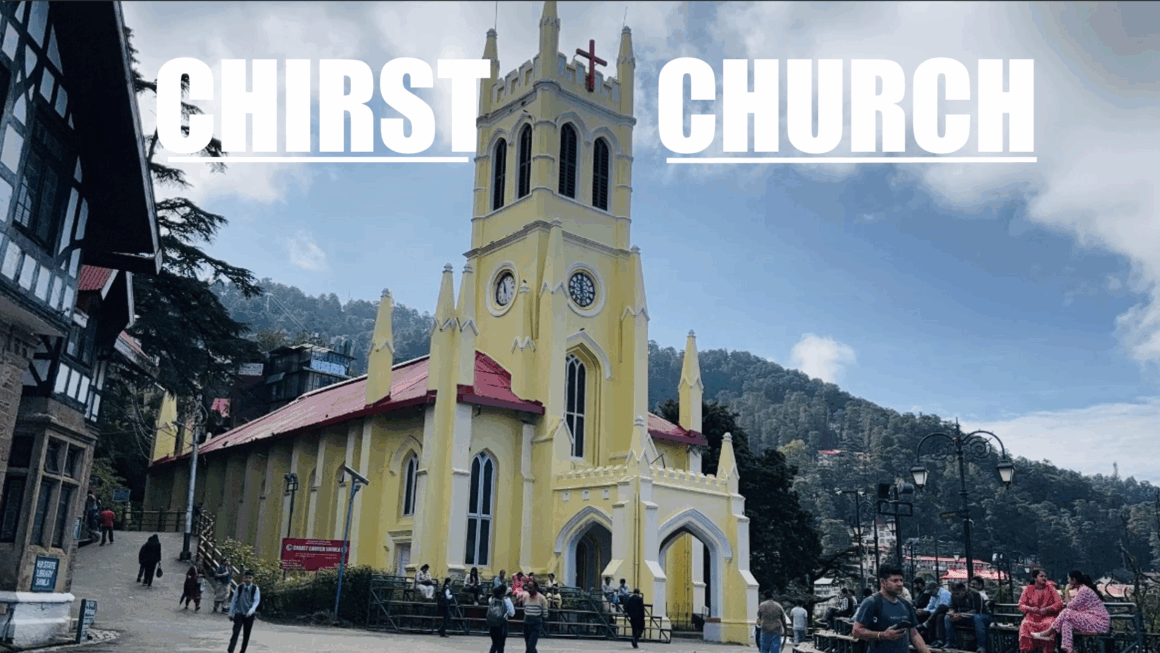
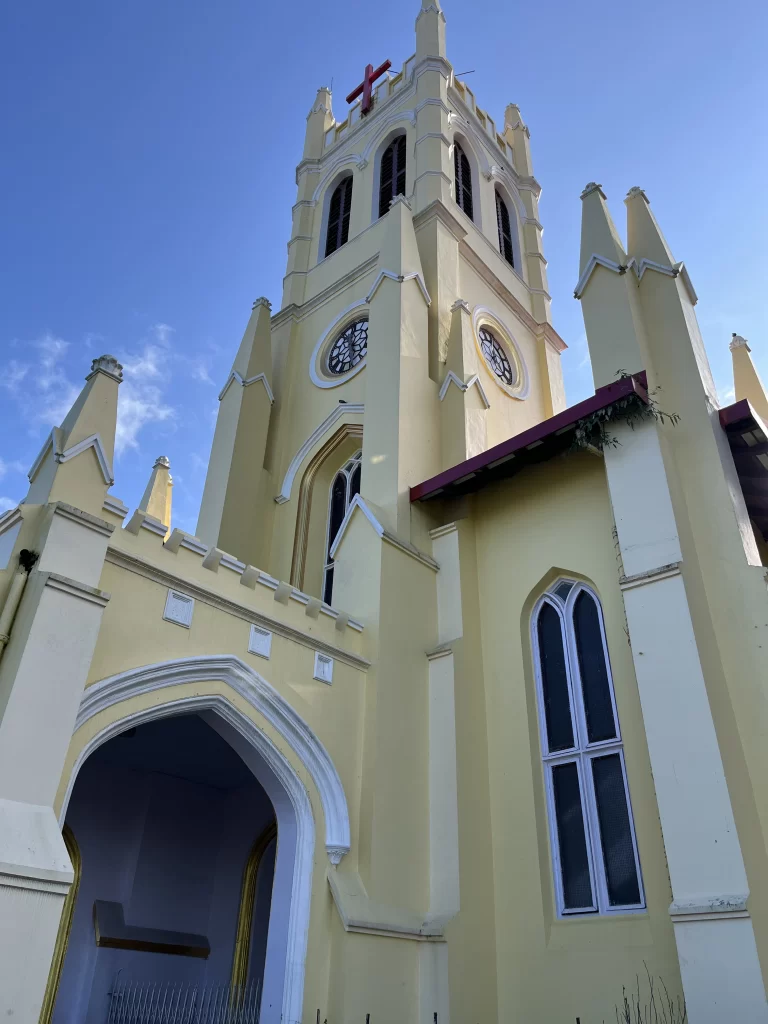
When one thinks of Shimla, a few images instantly come to mind — the bustling Mall Road, the panoramic Ridge, and of course, the pale-yellow silhouette of Christ Church standing tall against the Himalayan sky. Featured on every postcard, painting, and tourist memory, the church is not just a building but a timeless identity of Shimla.
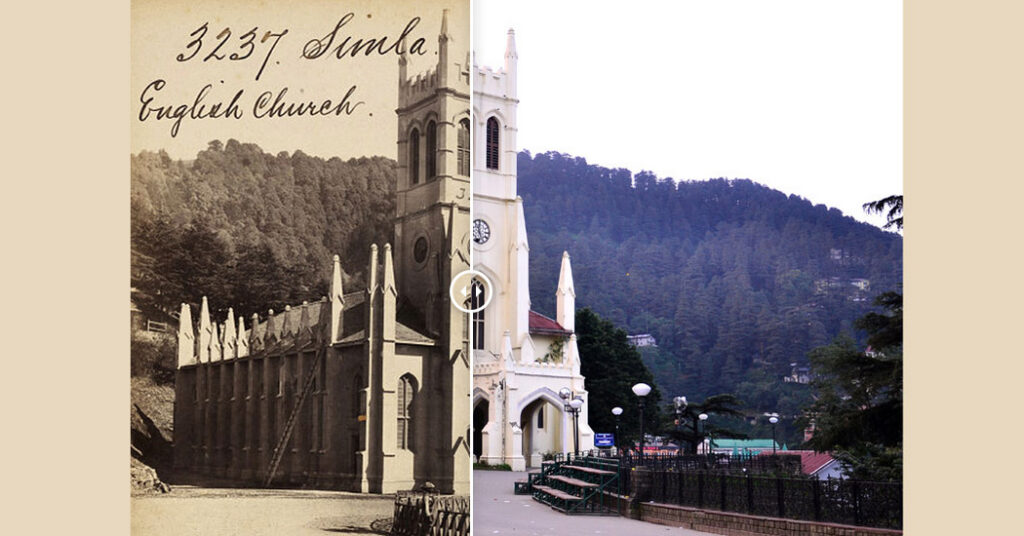
At nearly 175 years old, Christ Church has seen empires rise and fall, decades of change, and millions of footsteps on the Ridge. Yet, it continues to stand as a silent guardian of history and faith.
In this blog- Shimla’s iconic Christ Church, we’ll uncover the hidden stories, architectural secrets, and design details of Christ Church, Shimla — one of Asia’s oldest churches and a masterpiece of neo-Gothic architecture.
Historical Background of Shimla’s iconic Christ Church
The story of Christ Church dates back to the mid-19th century when Shimla was declared the summer capital of British India. With an increasing number of British officials, soldiers, and families moving to this Himalayan town, there arose a need for a formal place of worship.
Thus, the idea of Christ Church was born. Construction began in 1844, and after years of dedication, it was finally completed in 1857 — the same year that India witnessed the first war of independence. This meant that the church was being built amidst one of the most turbulent times in India’s history.
It is also believed that in earlier times, the bells of Christ Church could be heard across the town, marking time for the community and bringing a sense of rhythm to daily life. Even today, they carry echoes of that colonial past.
Christ Church holds another rare distinction — it is the second oldest church in North India (after St. John’s Church in Meerut), making it not just a local but a regional landmark of immense heritage value.
The total cost of construction ranged between ₹40,000 to ₹50,000, a massive sum for that era, especially considering the challenges of transporting material and labor in the steep Himalayan terrain. Yet, despite the odds, the church emerged as a symbol of faith and determination.
Architectural Design and Planning of Shimla’s Iconic Christ Church
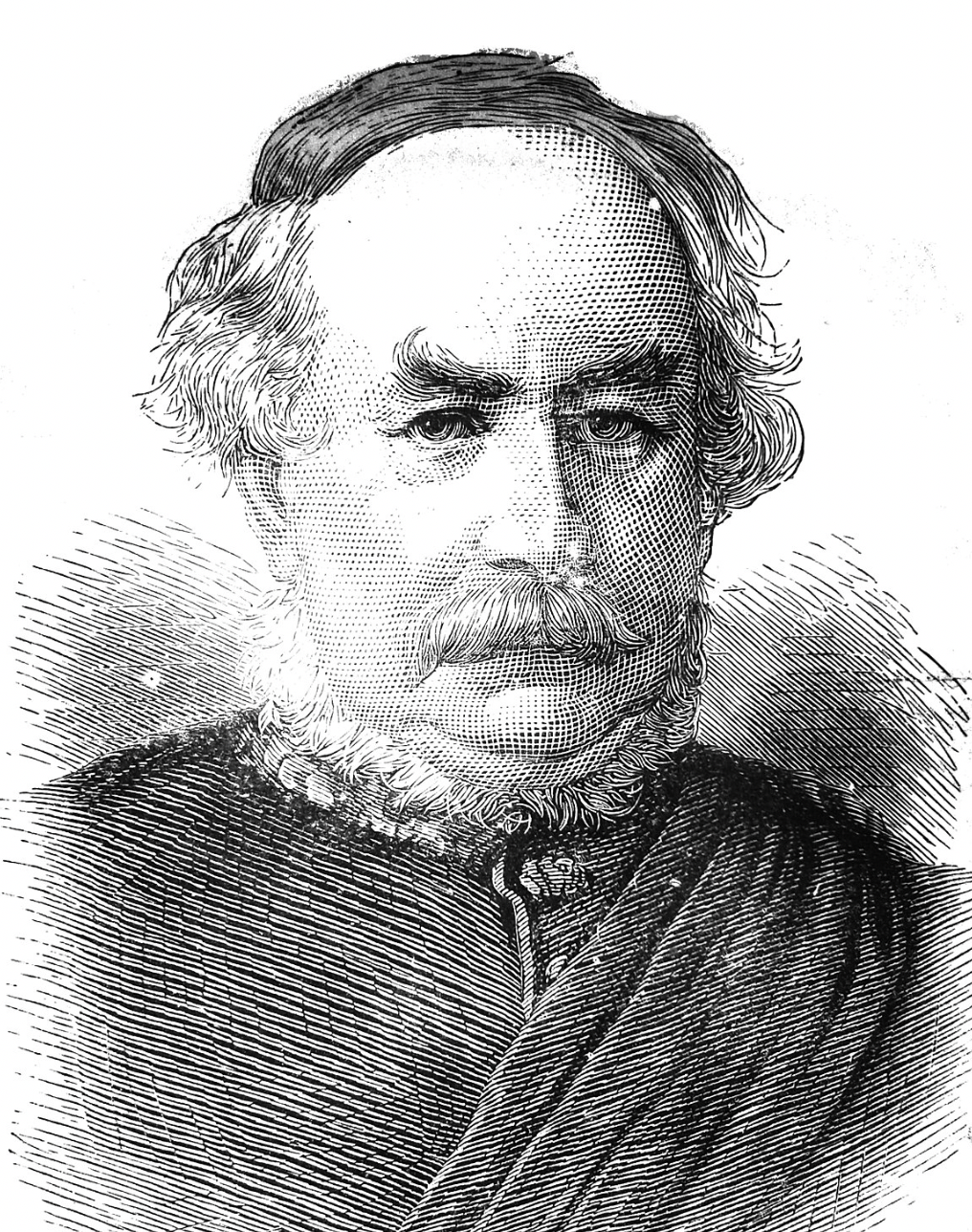
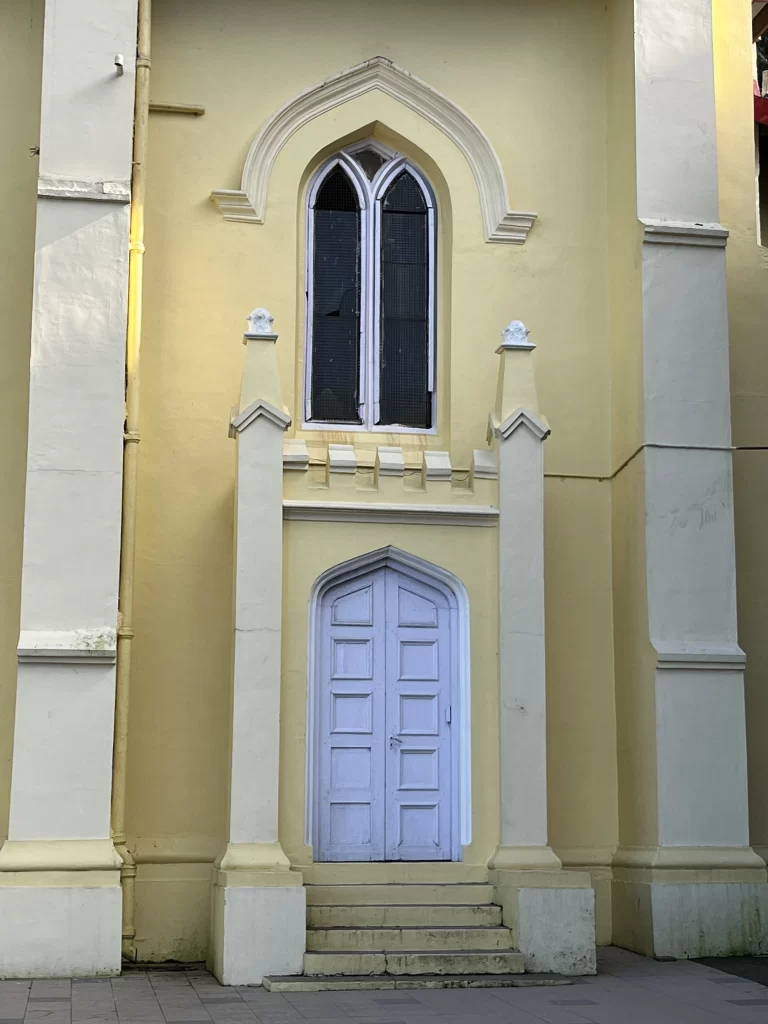
Christ Church was designed by Colonel J.T. Boileau in the neo-Gothic style, a form of architecture that originated in Europe and was widely adopted by the British in their colonies. Gothic Revival architecture is known for its emphasis on height, grandeur, and pointed features, all of which are visible in Christ Church.
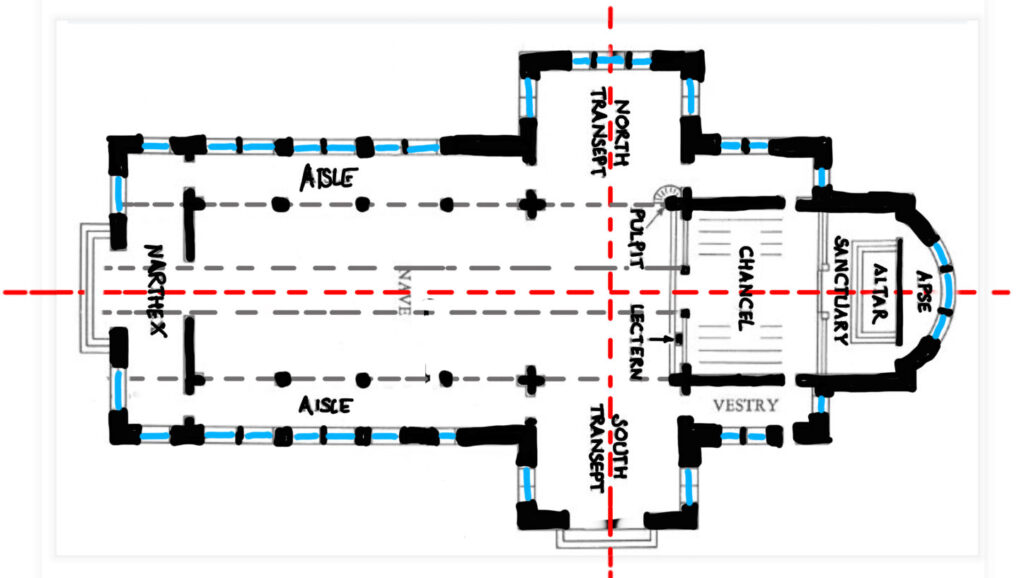
The church follows a traditional cruciform (cross-shaped) plan, symbolic in Christian architecture.
A central nave (main hall) forms the core.
Aisles run along either side of the nave, serving as passageways for worshippers.
The altar, raised on a platform at the front, becomes the sacred focal point for religious ceremonies.
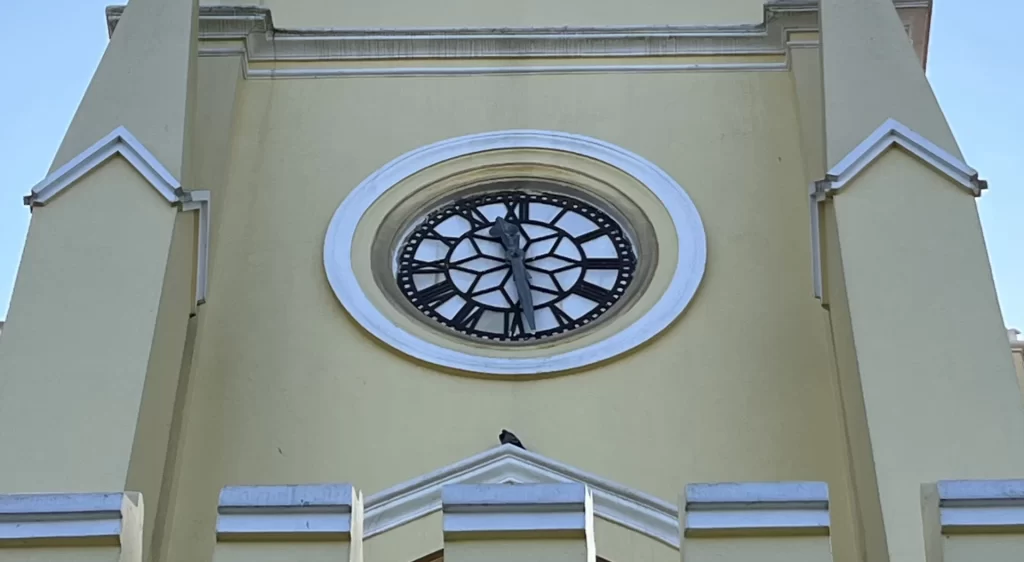
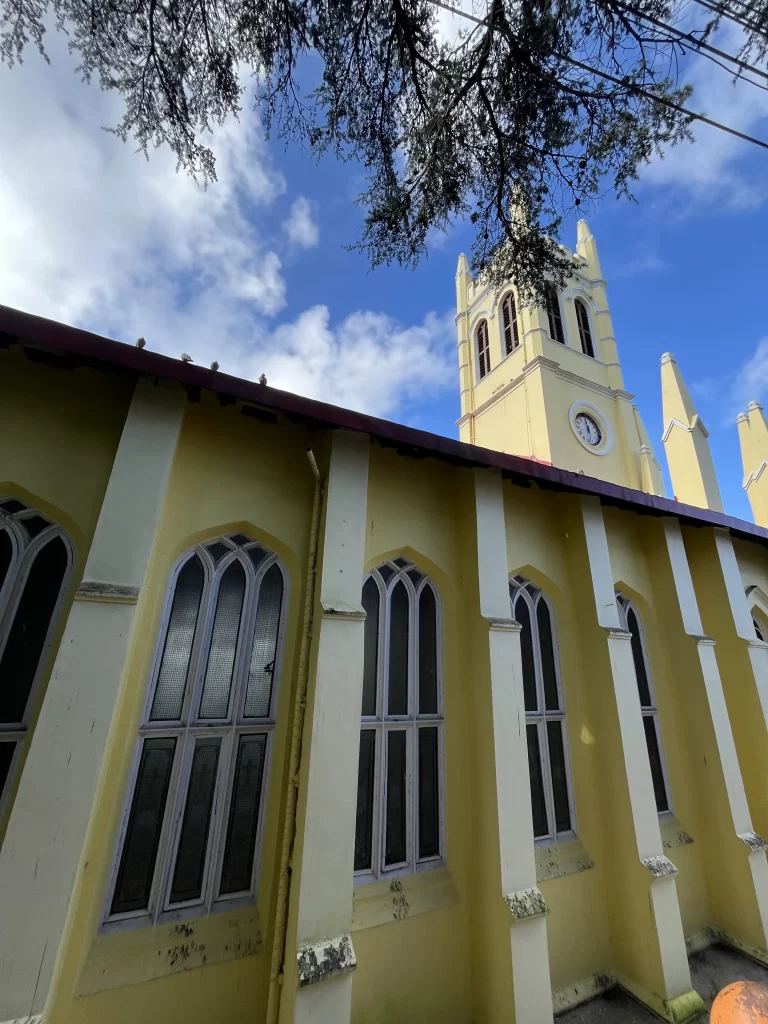
One of the most iconic features is the tower and clock at the front façade. In the 19th century, this was more than just an architectural feature — it served as Shimla’s timekeeper. Long before wristwatches and smartphones, locals, shopkeepers, and travelers relied on this clock to set their day.
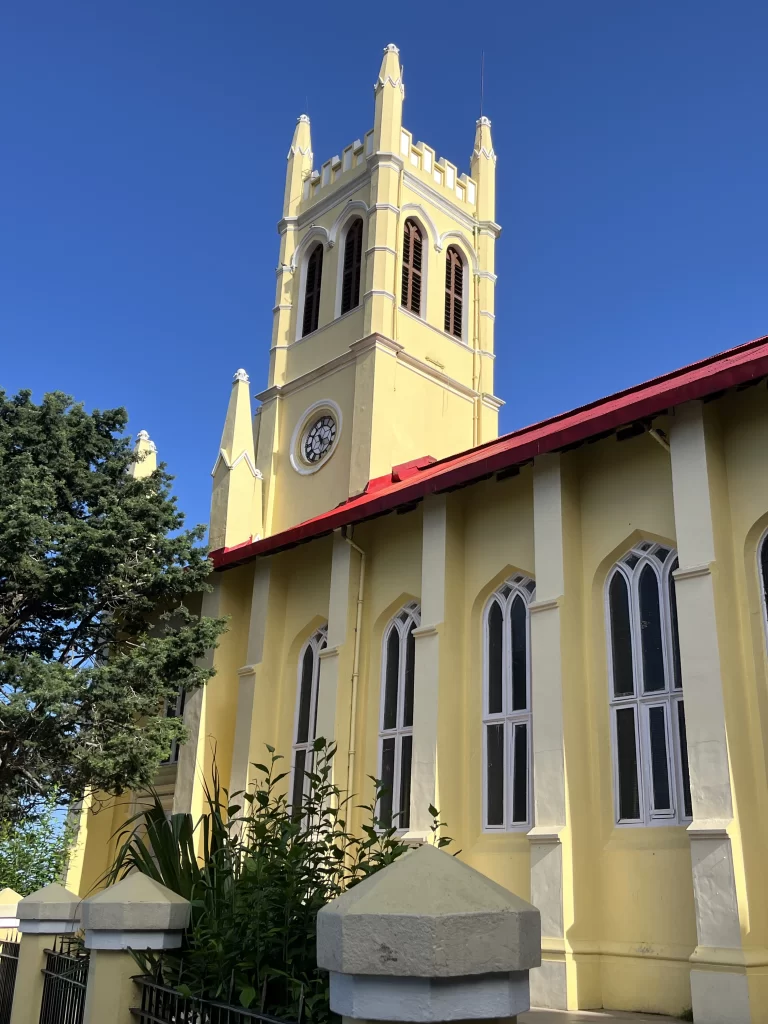
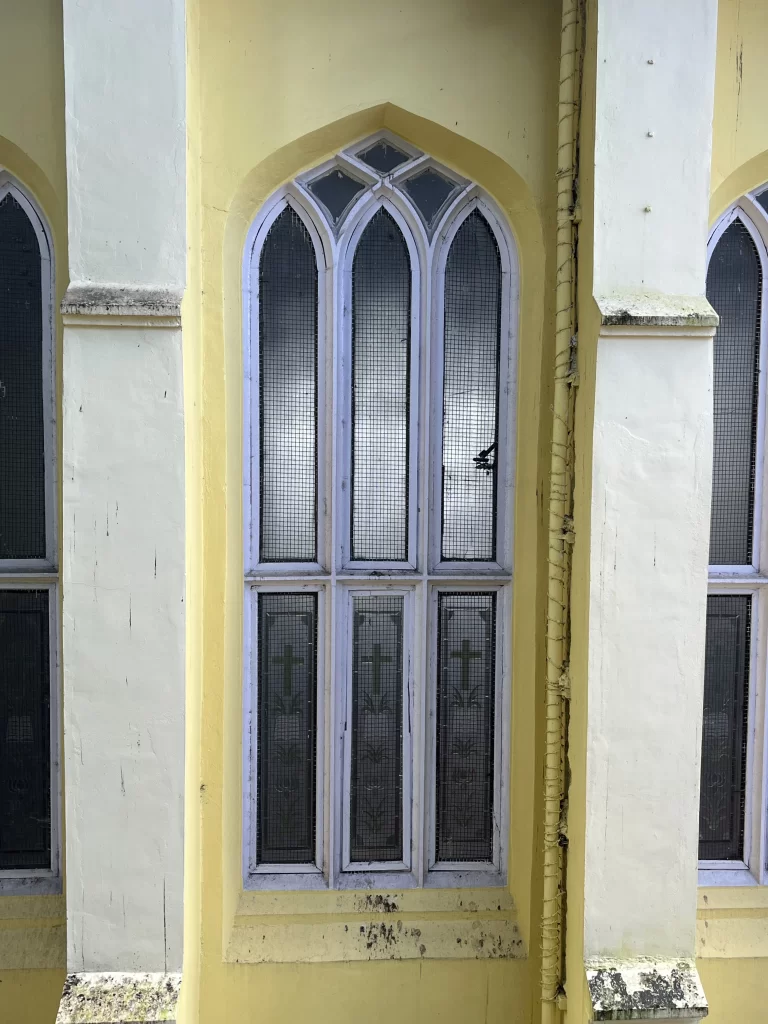
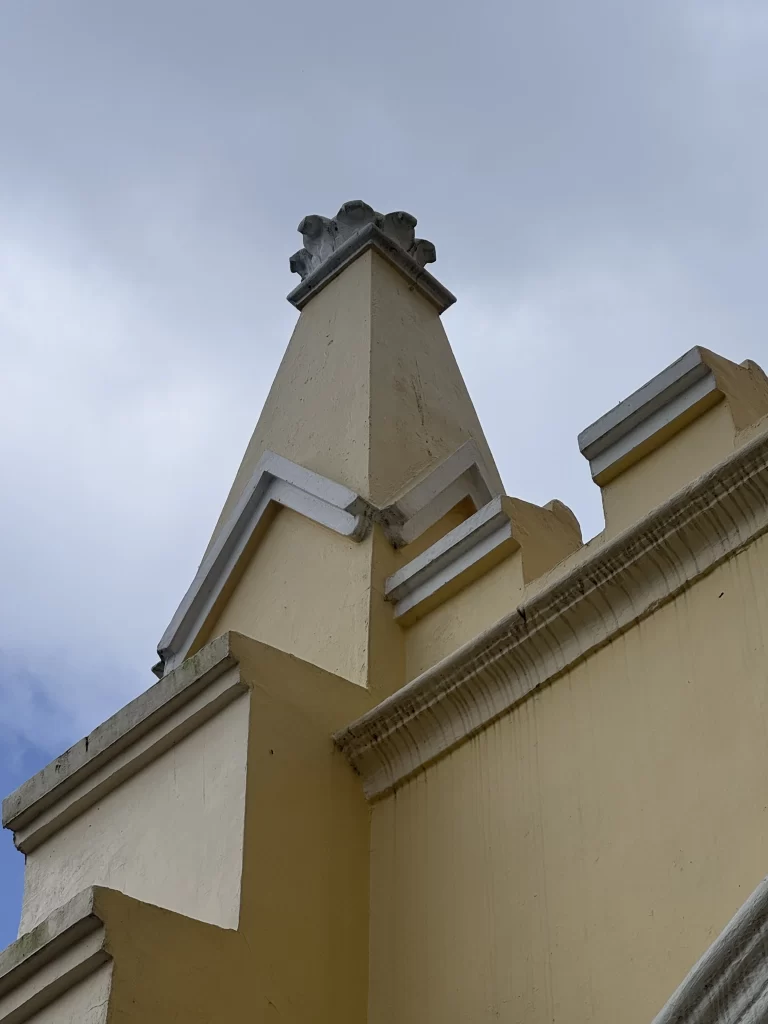
The tower itself is square at the base and tapers as it rises upward, adding verticality to the otherwise horizontal expanse of the Ridge. Adorned with pointed arches in windows, and mini spires or pinnacles at the corners, the tower carries the drama and elegance typical of Gothic architecture. These features were not merely decorative — pointed arches distributed structural loads better, allowing the church to endure snow, rains, and even earthquakes for nearly two centuries.
Thus, Christ Church is not just a pretty façade — it is a marvel of practical yet artistic design.
Building Construction and Materials
The construction of Christ Church is a fascinating story of adaptation. Unlike the plains of Europe, the Himalayas presented unique challenges — limited availability of cement, difficult terrain, and harsh weather conditions.
The walls were built from locally quarried grey stone, tied together with lime mortar rather than cement (as cement was not commonly available at that time). Interestingly, lime mortar proved to be more flexible and resilient against Shimla’s heavy rains and seismic activity, giving the church remarkable longevity.
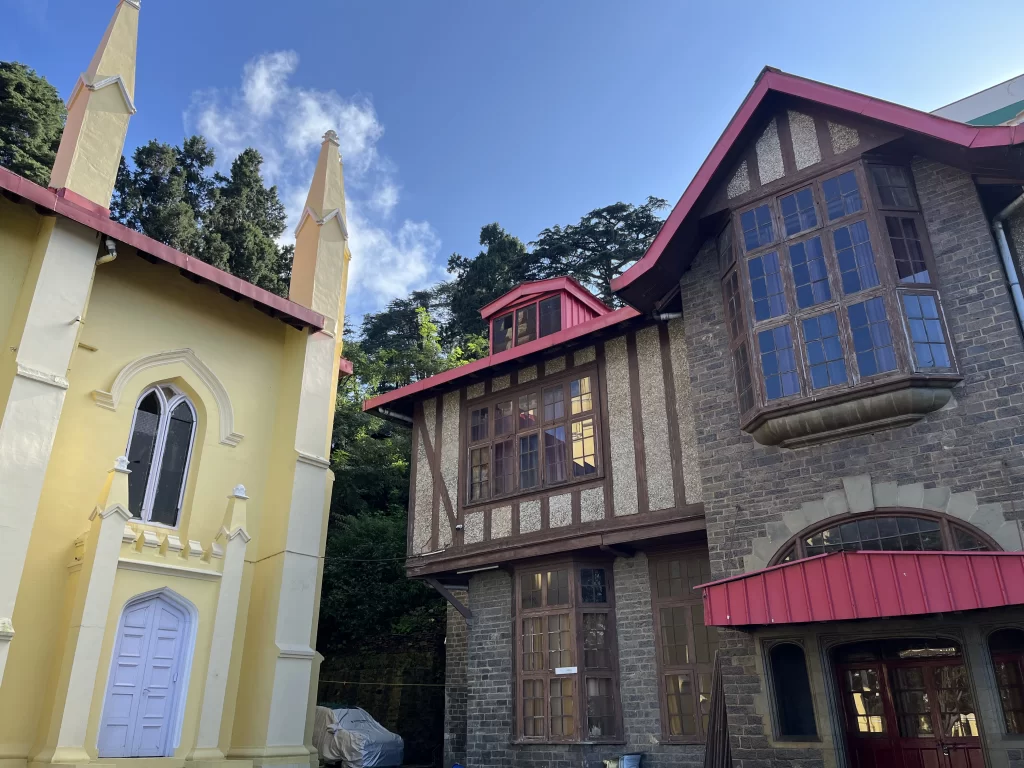
The church’s exterior is painted in a soft pale-yellow cream, a color that has become iconic. This shade was deliberately chosen because it stands out against the misty backdrop of Shimla, ensuring visibility from a distance even on foggy days.
The roof was originally made of slate tiles, a locally available material well-suited for snowy regions. Over time, however, these tiles were replaced with corrugated iron sheets to simplify maintenance.
Together, these construction choices reflect how British architecture was adapted to the local Himalayan context, blending imported styles with indigenous resources.
Interior Design: A Spiritual Experience
Stepping inside Christ Church feels like stepping into another century. The interiors are designed not only to inspire devotion but also to create a visual and spiritual experience.
Wooden Interiors and Ceiling
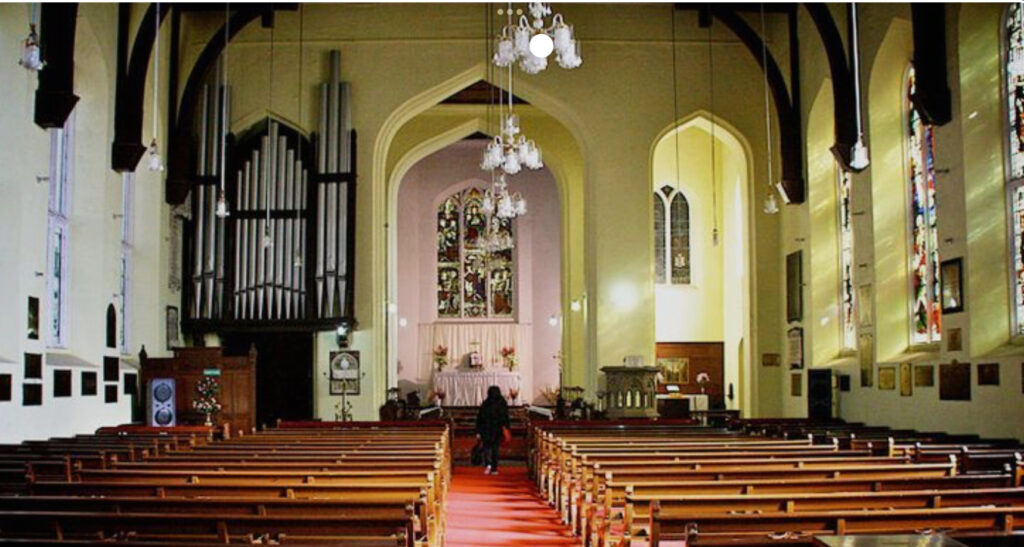
The high, sloping wooden ceiling with exposed trusses is another highlight. Made of timber, it not only adds grandeur but is also a smart adaptation to Shimla’s climate — the sloping form allows snow and rain to slide off, preventing structural damage.
The timber interiors, with pews and paneling, add warmth to the cold Himalayan environment, creating a space of comfort and contemplation.
Chandeliers and Lighting
Large brass chandeliers still hang from the ceiling, reflecting the grandeur of the colonial period. At night, when lit, they add to the church’s solemn beauty, making it one of the most photographed interiors in Shimla.
Stained Glass Windows
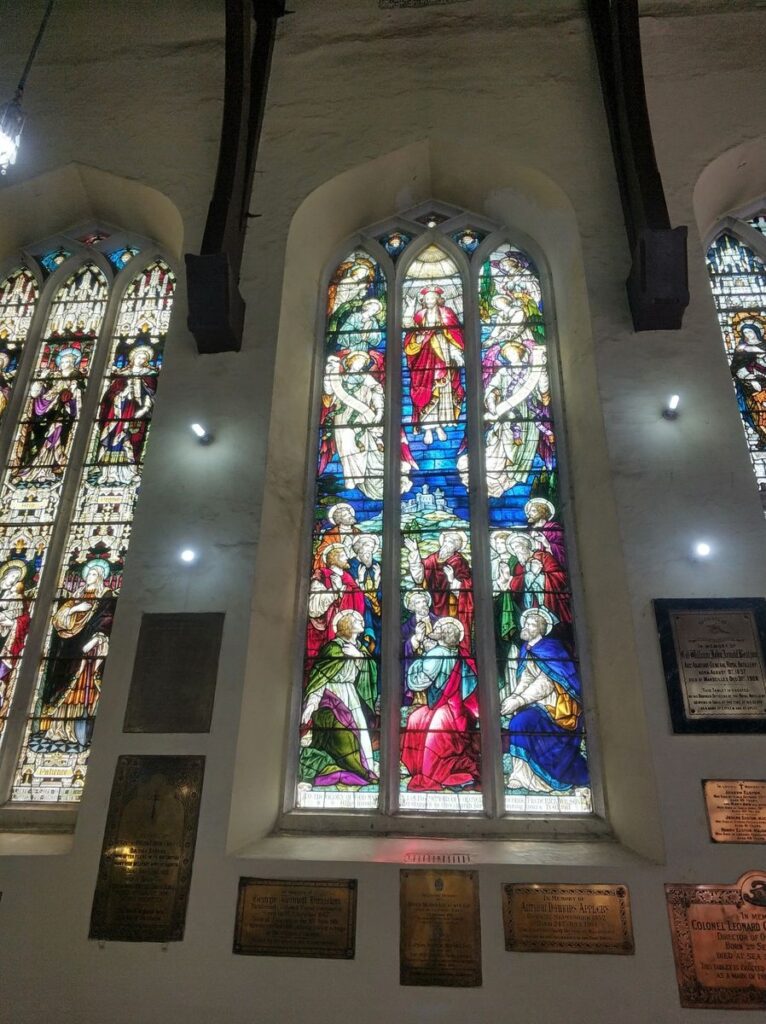
Perhaps the most striking element inside Christ Church is its stained-glass windows. Unlike ordinary glass, these colorful windows tell stories and symbolize values. Each of the five windows represents one of the five Christian virtues:
Faith
Hope
Charity
Fortitude
Patience
When sunlight filters through these stained windows, it creates a kaleidoscope of colors that fills the church interior with a serene, almost divine atmosphere. This play of light transforms an otherwise modest space into a spiritual experience.
Christ Church as Living Heritage
Christ Church is more than an architectural monument — it is a living piece of history. Over the decades, it has witnessed countless weddings, prayers, protests, and celebrations. It has stood through India’s independence, natural calamities, and the evolution of Shimla from a British outpost to a modern-day hill station.
Its design is not only symbolic of the British Raj but also a lesson in resilient, climate-adaptive architecture — something highly relevant for us today as we think about sustainable building practices in fragile Himalayan regions.
For the people of Shimla and the millions who visit each year, Christ Church remains a symbol of faith, resilience, and timeless beauty.
Conclusion
Christ Church, Shimla, is not just a landmark — it is a story carved in stone and glass. From its humble beginnings in 1844 to its present status as one of the most iconic structures of North India, it has stood tall as a guardian of the past.
It tells us about the British legacy, about the adaptation of European design to Himalayan conditions, and about how faith and architecture can create something truly timeless.
For architects, historians, and travelers alike, Christ Church is a lesson — a reminder that heritage is not just about preserving old buildings but about understanding our cultural identity and learning from the past.
As I begin this Heritage Shimla Series, Christ Church is the perfect starting point. Because if there is one structure that truly defines the heart of Shimla, it is this pale-yellow church with its soaring tower, its ringing bells, and its eternal stained glass light.
So, the next time you walk down the Ridge and glance up at Christ Church, remember — it is not just a postcard image, but a living heritage that has stood strong for over 175 years.
I hope you liked this blog Shimla’s iconic Christ Church, please let me know through your comments. Also share it with other people who are passionate about architecture and design. Contact us in case of any queries and also read my previous blogs related to architecture and travel. Thank you.
Namaste,
I am Himanshi Sharma, by profession I am an Architect (B. Architecture) and Planner (Environmental planning and management). On this website we will discuss about various topics related to architecture, designing, planning, environment, travel and many more.