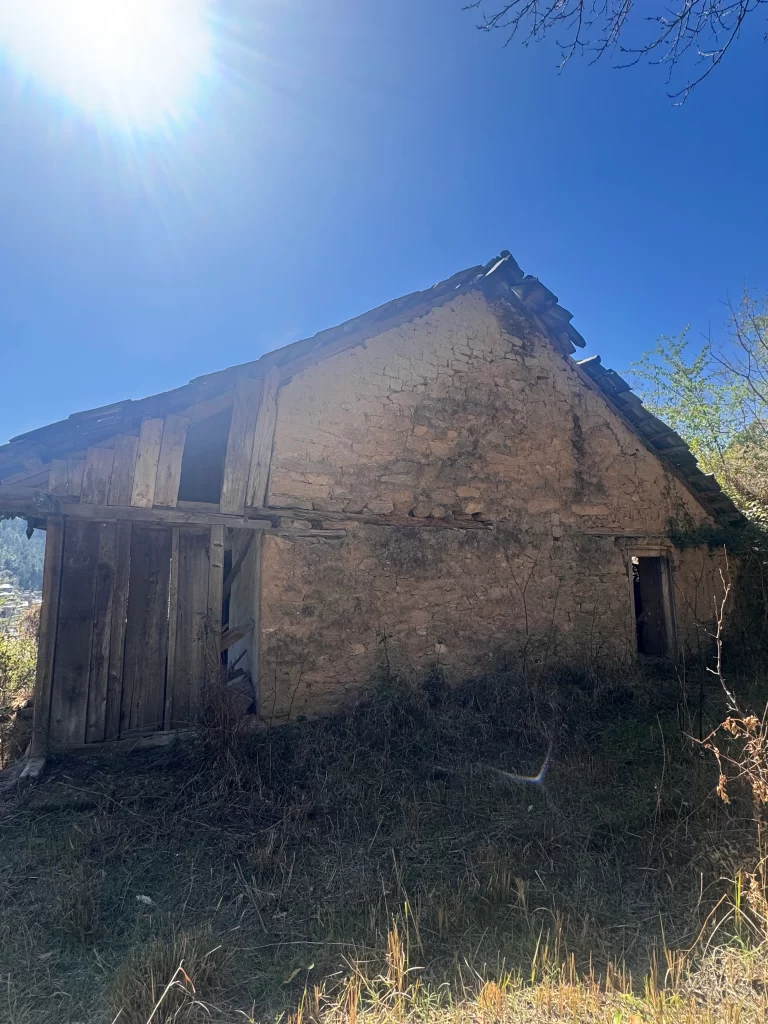
A few weeks ago, I found myself walking through the rugged trails of Karsog Valley in Himachal Pradesh, India. The air was crisp, the pine trees tall and silent, and there — almost hidden among dry grass and wild shrubs — stood a house that time had left behind. If you are interested to know more read full blog- Forgotten Traditional Himalayan Homes.
At first glance, it looked like any other abandoned home. But as I got closer, I realised this was something more — a piece of vernacular architecture built with stone, mud, and wood. A house not just made for shelter, but shaped by climate, culture, and craft.
Design That Speaks the Language of the Land
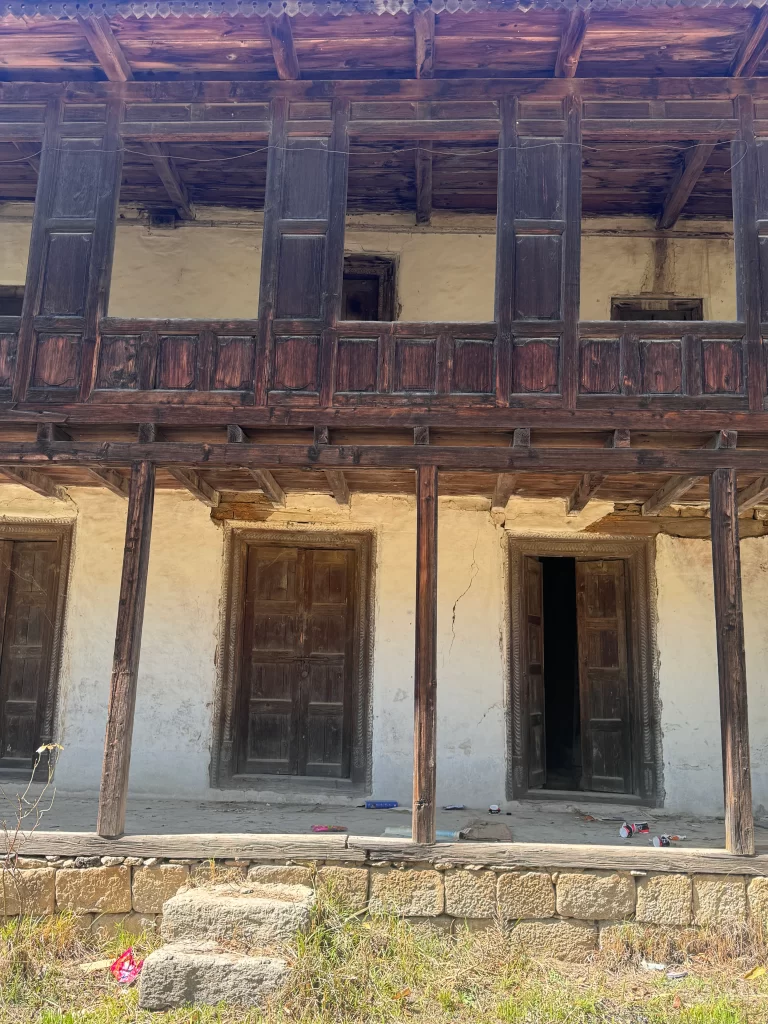
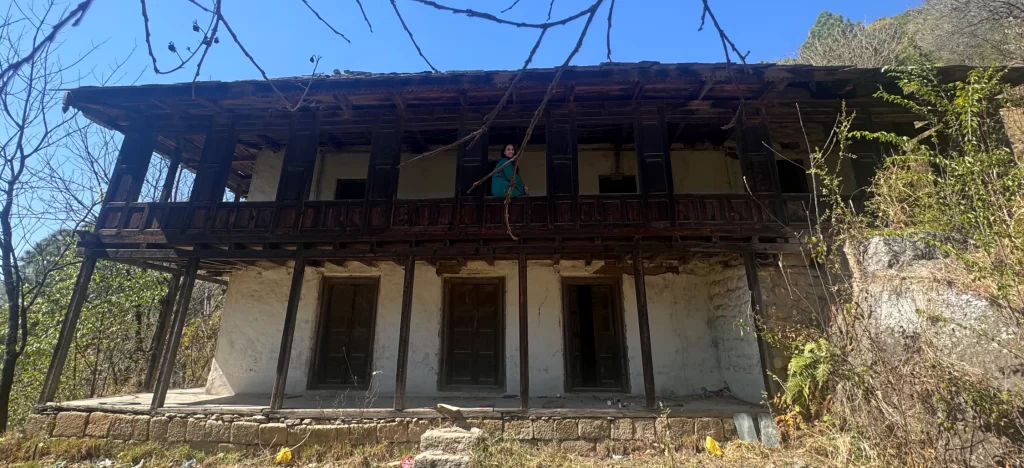
The house is two stories high, simple in form but deeply rooted in local knowledge. A long verandah runs along both levels, supported by slender wooden columns. These verandahs weren’t just aesthetic flourishes; they’re passive design in action — offering shade in the summer and letting in the low winter sun.
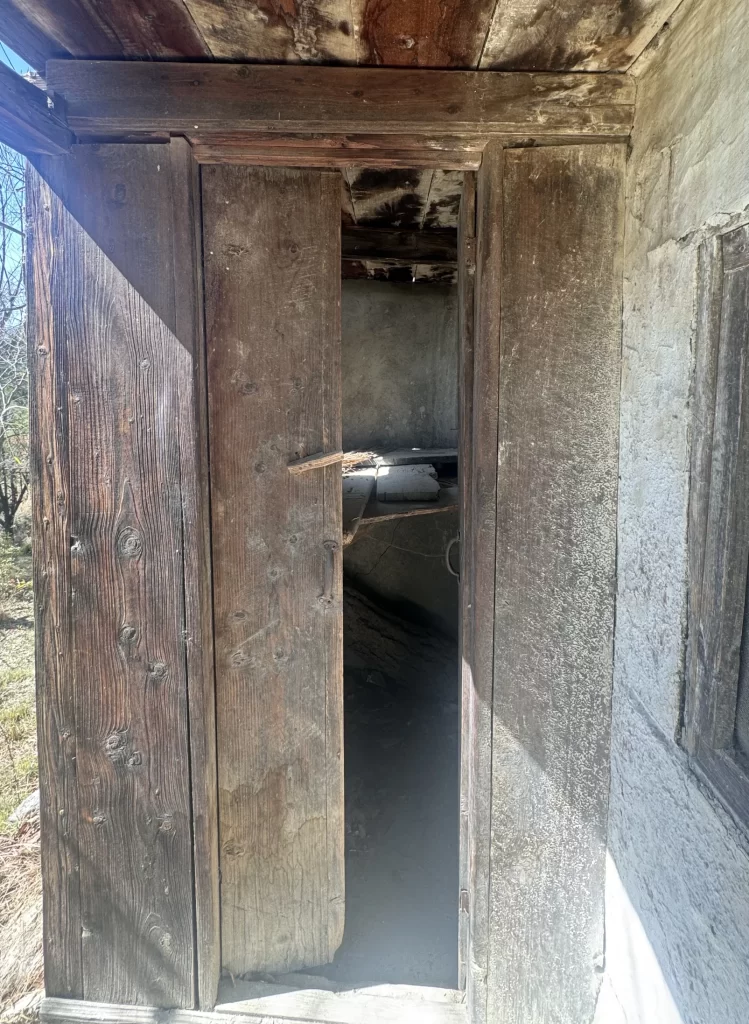
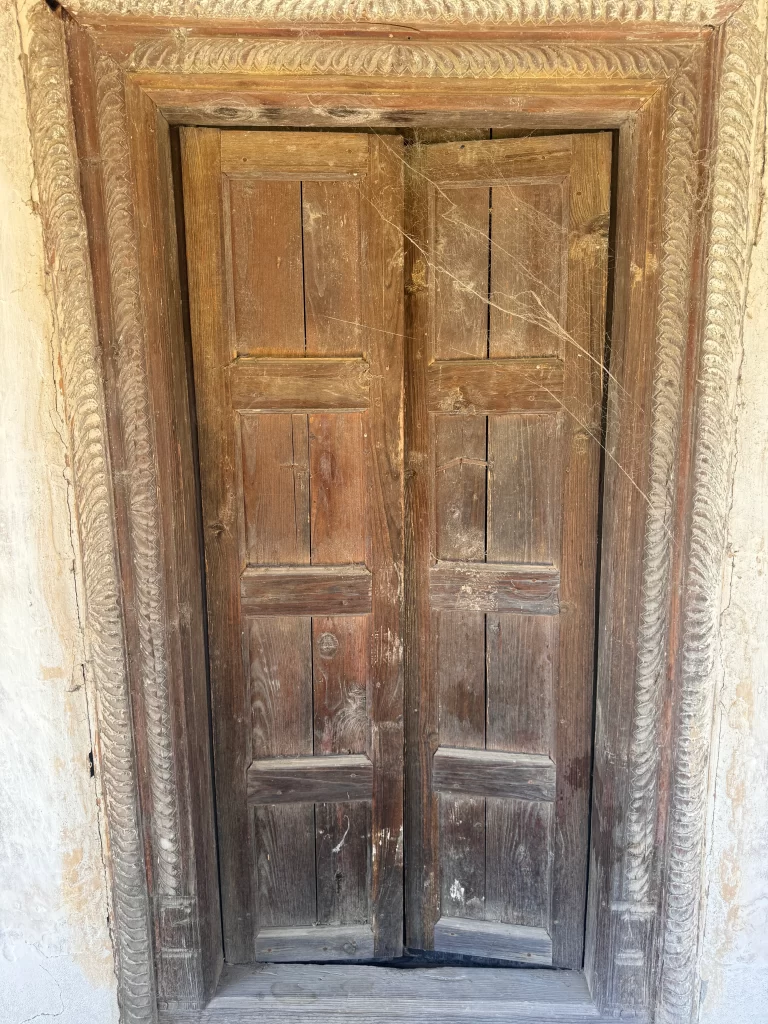
Inside, the layout is functional and linear. A series of rooms open into the verandah, each with heavy wooden doors and small windows. There’s no ornamentation, no unnecessary complexity — just purpose-driven design.
And like many traditional homes of the region, the toilet is located outside, in a corner away from the main building. It’s a detail often overlooked, but it tells you how our ancestors thought about hygiene long before the days of septic tanks and plumbing codes.
Construction that Built to Last
What strikes you immediately is the material palette: stone, mud, and wood — all locally sourced, all low-impact. The ground floor is made with thick stone masonry, while the upper floor uses a mix of timber frames and mud plastered walls. There’s no cement, no steel reinforcement, and yet the structure has endured for decades, if not more.
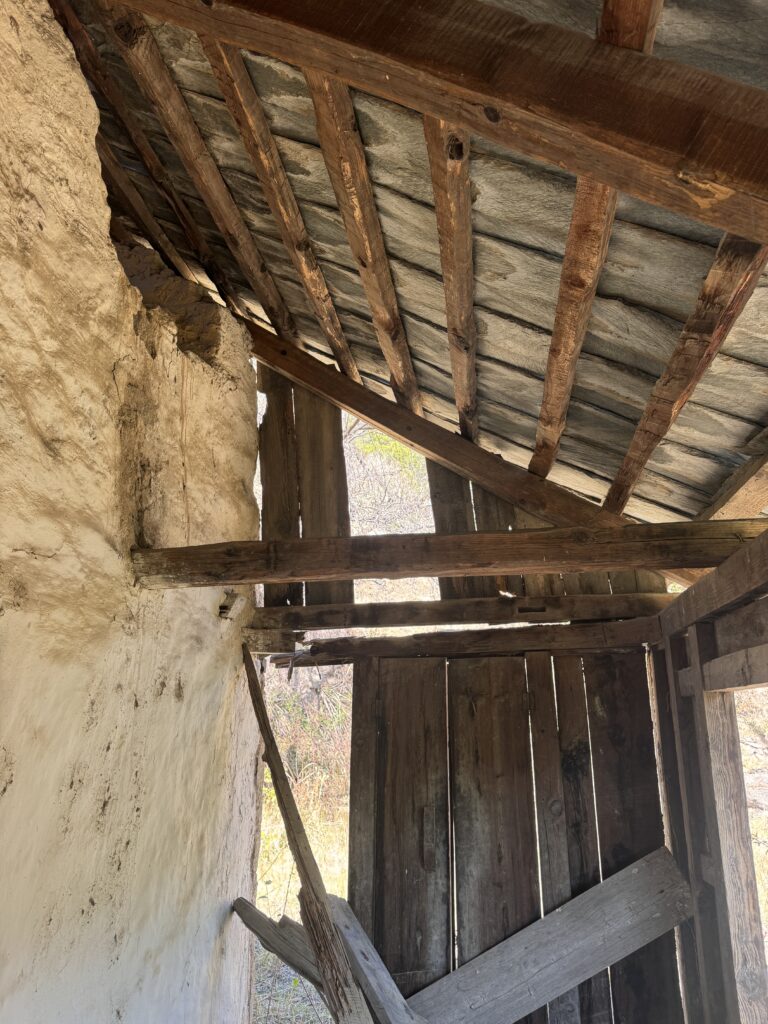
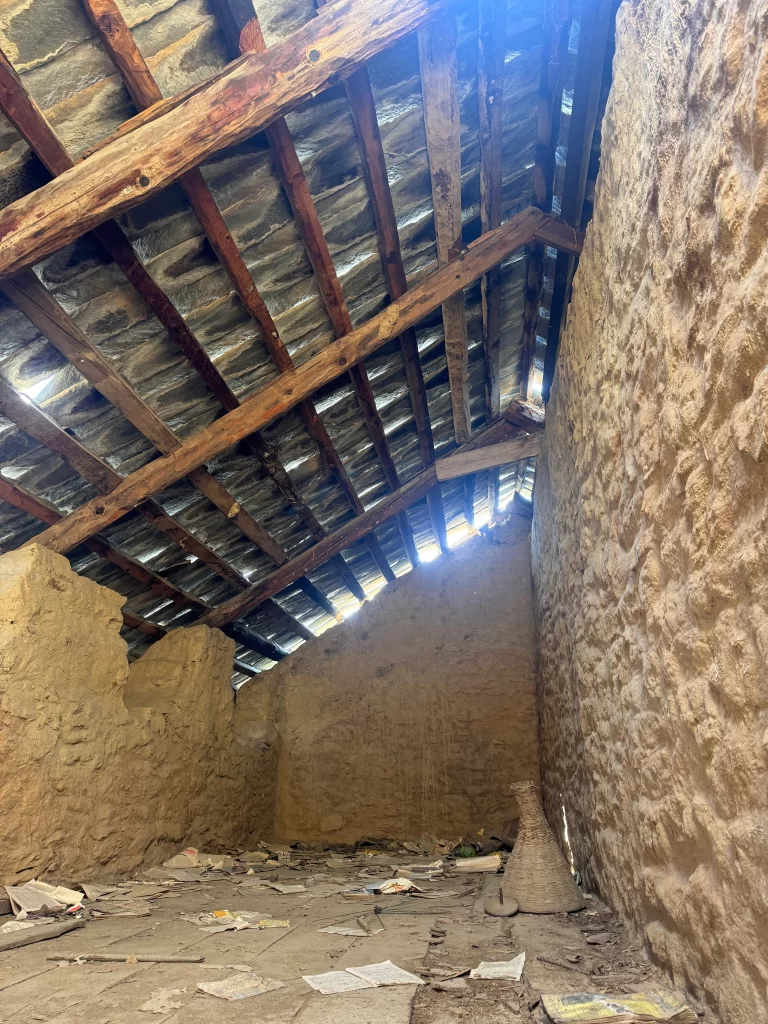
The roof is sloped and clad with slate tiles, common in Himachali architecture. Underneath is a network of exposed wooden rafters and purlins — beautifully weathered, but still doing their job.
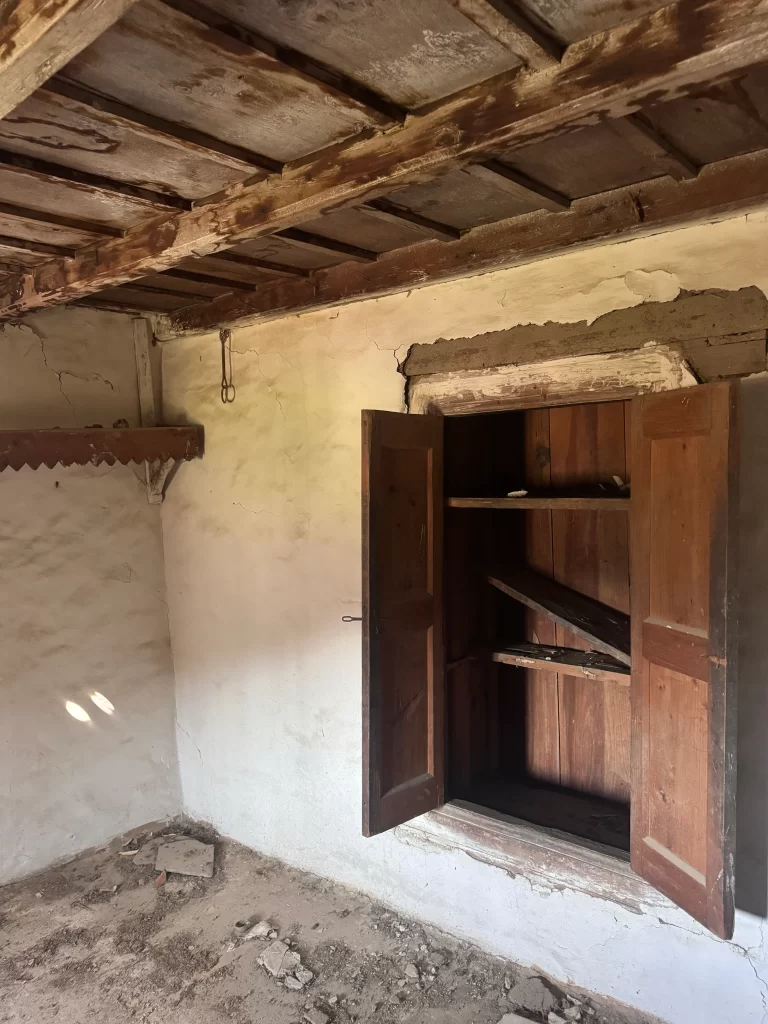
Wood has been used generously throughout — not just as structural framing, but also for doors, windows, railings, and even the ceiling planks. It’s aged with a quiet dignity, showing cracks and warps, but still holding strong. In today’s world of synthetic materials, there’s something grounding about this tactile honesty.
A Sustainable Home before Sustainability was a Buzzword
This house was never “designed for sustainability” in the way we think about it today. But make no mistake — it’s sustainable in the truest sense of the word.
Everything here is biodegradable or reusable. No concrete, no plastics. The thermal mass of stone keeps the interiors warm during the biting Himachali winters. The mud plaster acts as insulation, helping to regulate indoor temperatures.
Then there’s the layout, the south-facing verandah ensures optimal solar gain in winters. The roof overhangs prevent excessive sun during summer. The thick stone walls store heat and release it slowly. No HVAC, no solar panels — just intuitive design responding to centuries of lived experience in a cold mountain climate.
Ventilation too is handled beautifully. Windows and doors are placed to allow cross-ventilation, cooling the house naturally in summer. It’s smart, and it’s completely passive.
Details That Tell Stories about Forgotten Traditional Himalayan Homes
I spent some time just observing the architectural detailing. The wooden door frames have faint carvings — simple, rhythmic patterns that suggest a craftsman’s hand, not a machine’s precision. The balustrade on the upper verandah has a repeated geometric pattern — again, not just decorative, but giving structural integrity to the railing.
The patina on the wood is spectacular. Years of sun, wind, and rain have turned it into a surface that speaks of age without decay. It reminds me that aging gracefully is something architecture can do — when we let materials be honest.
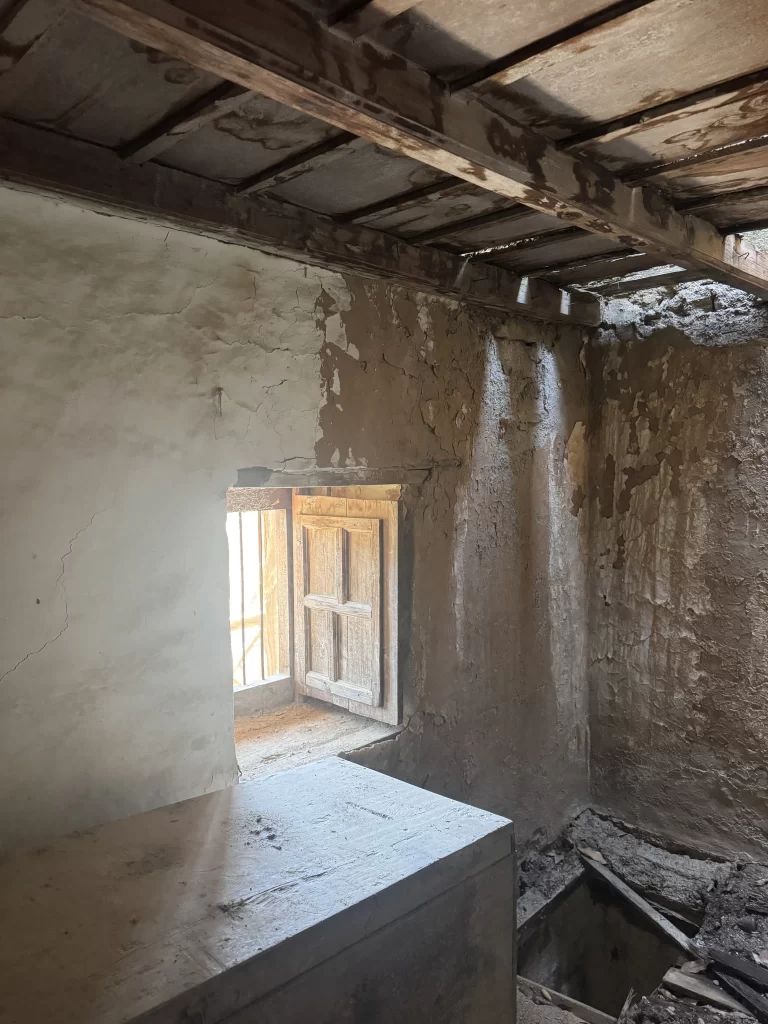
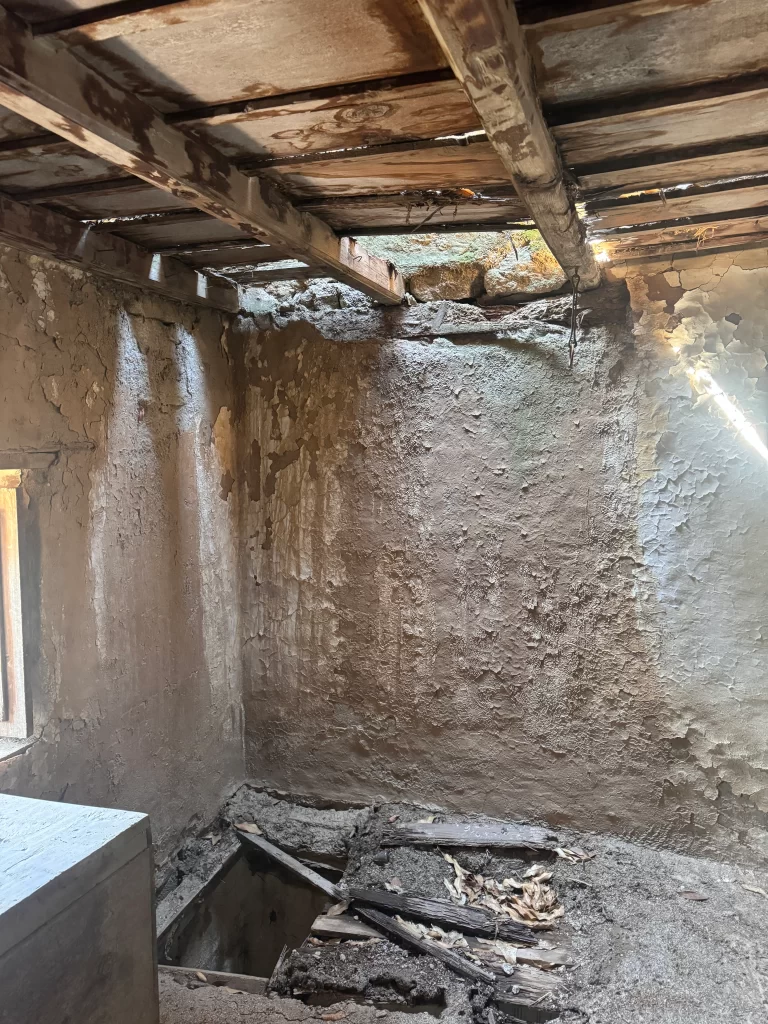
Even the broken parts of the house — a collapsed corner of the roof, debris in the corridor, mud peeling off the walls — seem more poetic than tragic. They’re not failures. They’re reminders that all buildings are living things, and like us, they age.
What’s inside the house
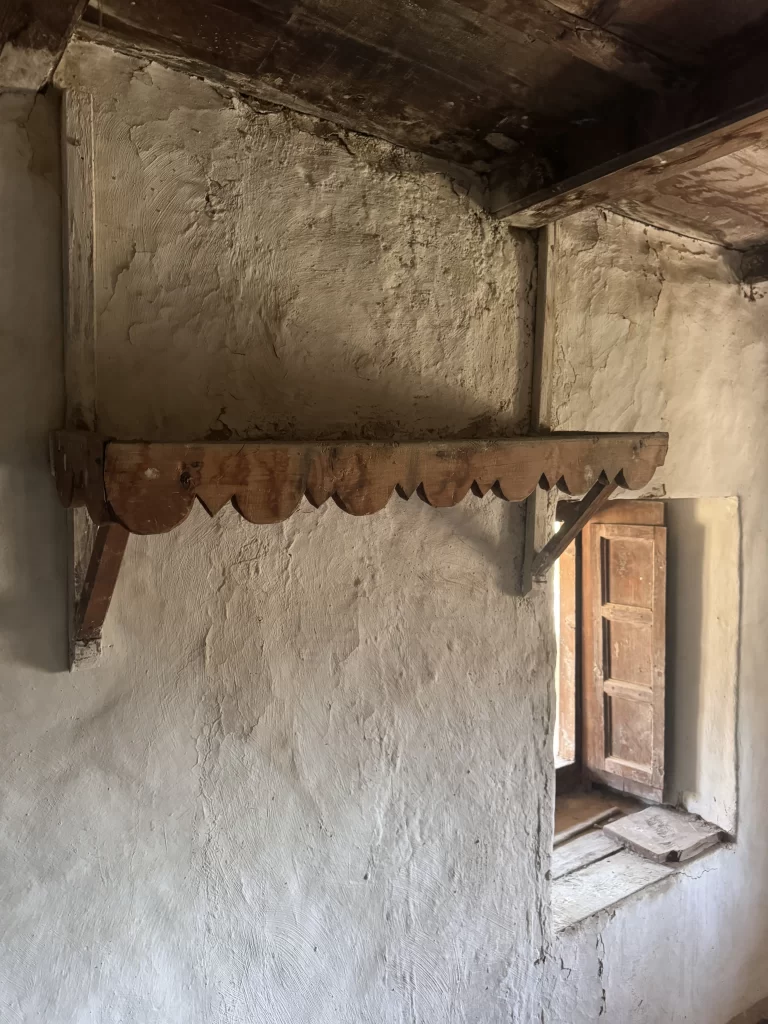
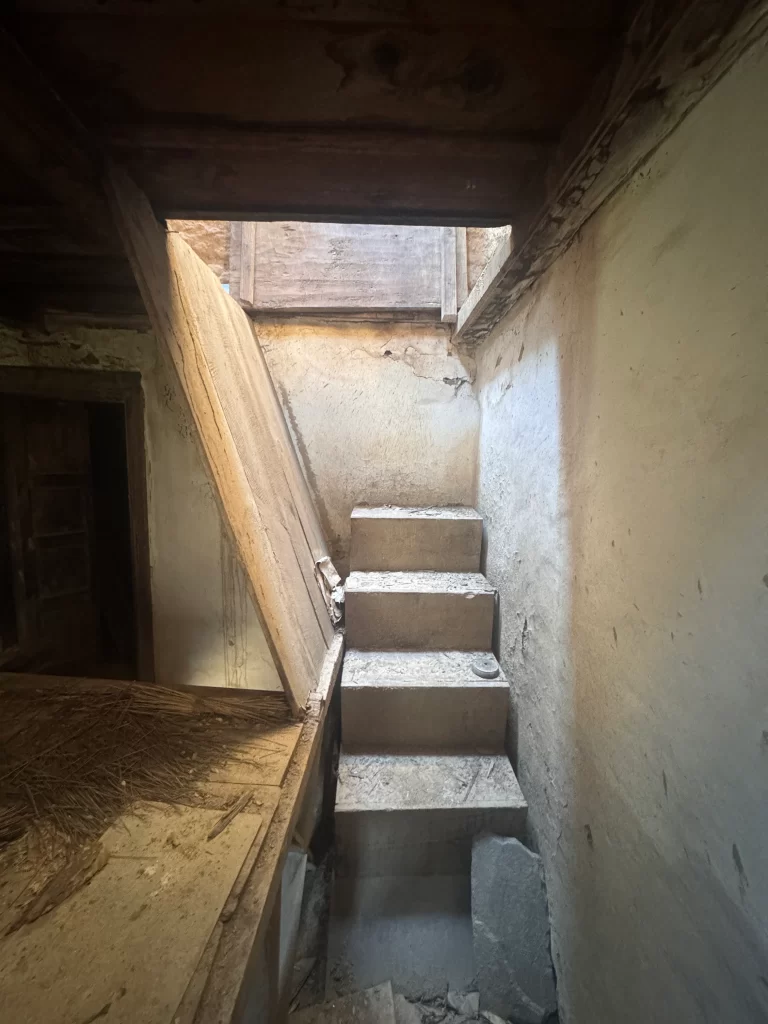
I took a chance to see the house from inside, I mean why not. It was little dark when entered but the mobile torch really helped. It has very simple interiors with basic doors and windows. I can declare the house interiors to be minimal in nature with small wooden cupboard and shelves on the walls. The ceiling of the ground floor was all made using long timber slabs. Also there were a narrow wooden stairs that goes upto first floor. The first floor had a kitchen and rooms. The sandook (wooden trunks) were lying for storage purpose.
It was so interesting to know that the house had an attic area too. The space had enough headroom space to do any kind of day to day activities. The roof has exposed slates lying on timber horizontal and verticals frames. The whole interiors of the space was all about people call “minimalism” today. It clearly was a case of minimalist architecture design.
What We’ve Lost (And Can Still Learn)
As an architect, I often find myself buried in drawings, regulations, and performance metrics. But this house in Karsog reminded me of something fundamental: buildings are part of the environment, not separate from it. This structure didn’t try to dominate the land — it nestled into it, borrowing from it, and eventually returning to it.
In a time where we’re spending millions trying to make buildings “green”, here stands an old Himachali home — abandoned, quiet, built without modern tech — and it checks all the boxes:
Local materials
Passive heating and cooling
Minimal environmental impact
Strong community craftsmanship
Designed for climate, not against it
Sustainable Architecture Design It’s time we stop seeing such homes as “backward” or “obsolete”. They hold answers we’ve forgotten in our chase for glass, steel, and drywall.
Final Thoughts
This vernacular house in Karsog isn’t just a structure. It’s a repository of knowledge — environmental, cultural, architectural. It belongs to a lineage of builders who never went to design school but understood form, material, and climate better than most of us with degrees.
Sure, it’s abandoned now. Dusty. Damaged. But it has soul. And if we pay attention, it still has plenty to teach us.
I hope you liked this blog Forgotten Traditional Himalayan Homes, please let me know through your comments. Also share it with other people who are passionate about architecture and design. Contact us in case of any queries and also read my previous blogs related to architecture and travel. Thank you.
Namaste,
I am Himanshi Sharma, by profession I am an Architect (B. Architecture) and Planner (Environmental planning and management). On this website we will discuss about various topics related to architecture, designing, planning, environment, travel and many more.